The system is telling you something.
I'm Richard Crazythunder, a delivery leader who learned to stop treating execution failures as the problem, and start treating them as the signal.
I lead complex delivery, program, and portfolio environments by aligning leaders, recovering troubled work, building operating structure, and turning ambiguity into execution.
When delivery starts breaking down, the visible problem is rarely where the problem began.
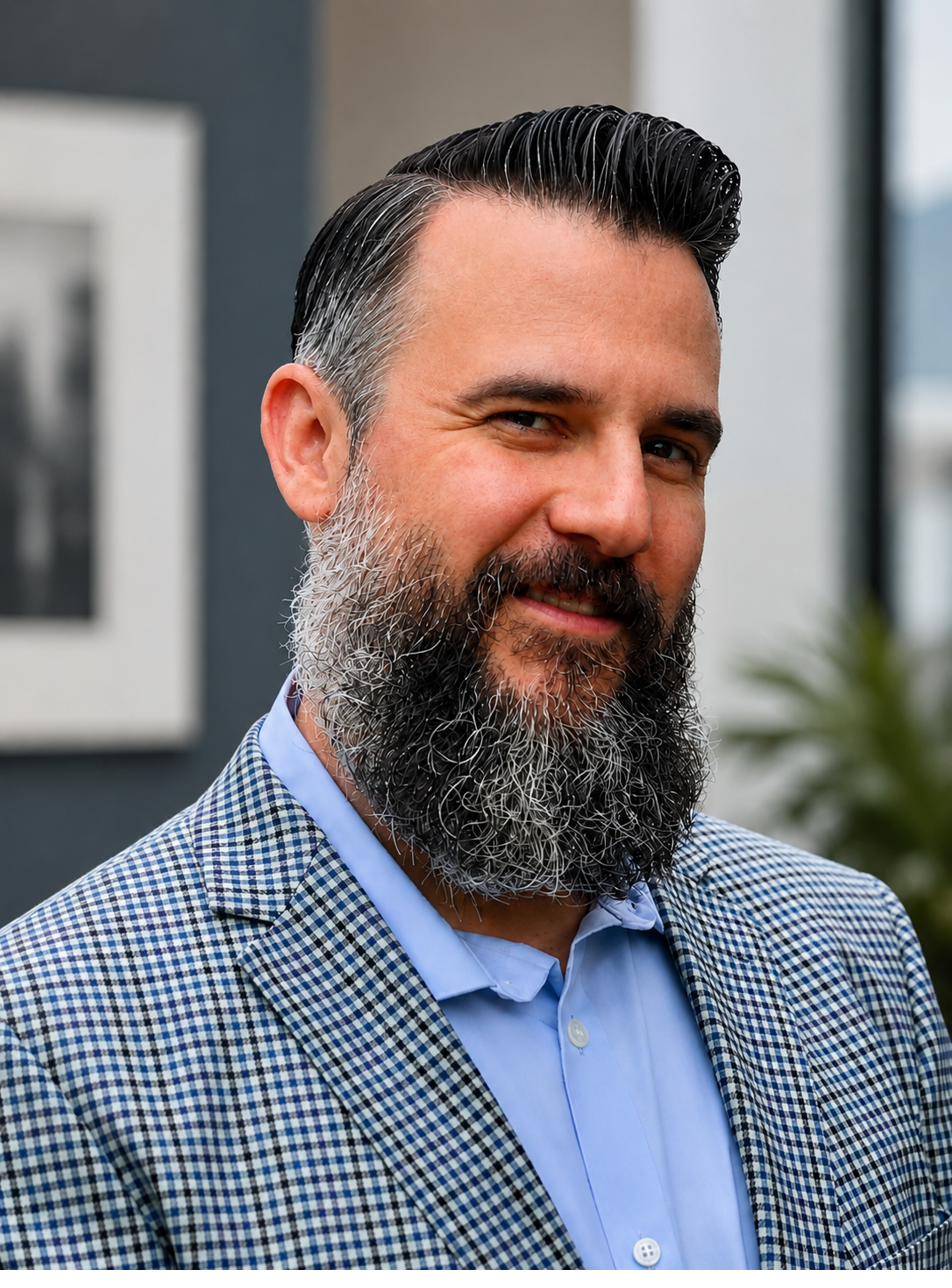
A delivery leader who learned to listen upstream.
My background is in delivery and program leadership. I have twenty years of leadership experience, including the last decade directly in project and program management. I've led teams of 25+ across energy, telecommunications, transportation, and financial services. The largest single program I've managed was valued at $6.5M.
I listen to the system before I touch it. I identify where work is bottlenecking, where decisions are stalling, where alignment is losing cadence behind the activity. The solution comes from what I find, not from a playbook I brought with me.
The cause is upstream from the complaint
Every symptom has an origin, and I listen for what's generating it rather than manage the noise it creates.
Diagnosis before design
I arrive with questions and pattern recognition, not a solution I wanted to apply.
Flow over activity
Busy isn't the same as productive. I look for work that moves from commitment to completion with less friction and clearer accountability.
Leadership alignment is the leverage point
I look at leadership alignment first, because it's usually the most expensive problem an organization isn't measuring.
Clarity is a deliverable
Every engagement I run produces something concrete: a decision made, a system redesigned, a diagnosis documented.
Six places execution quietly breaks down.
This is not your standard maturity model. This is how I trace how work enters, moves, waits, gets governed, and eventually teaches the organization something, or fails to.
Goal Translation
Leadership intent is rarely as clear as it sounds. The first move is turning ambition into something people can actually execute.
Intake
When work enters through too many doors, everything becomes urgent and no one has authority to say no.
Flow
Being busy doesn't mean work is moving. I look at where it slows, waits, gets hidden, or comes back as rework.
Decisions
Many delivery problems are just decisions stuck at the wrong level, in the wrong meeting, with no rule for escalation.
Signals
Status tells leaders what already happened. I design for the signals that show what's starting to drift.
Learning
Without a durable learning rhythm, nothing stops the same failure from happening again next quarter.
What I bring into an organization.
Our first focus is finding the upstream cause and building something durable in its place.
Complex Delivery Leadership
Leading high-stakes programs where scope, people, risk, and expectations all have to stay connected.
Delivery Recovery
Stepping into a program after confidence has broken down and rebuilding clarity around commitments, ownership, and what happens next.
Operating Structure & Governance
Creating the decision paths, working rhythms, and visibility leaders need without burying people in process.
Executive & Stakeholder Alignment
Turning competing expectations into decisions, tradeoffs, and commitments people can actually carry through.
Facilitation & Problem Solving
Structuring a hard conversation so it ends in a decision, not another meeting.
Trust turned into more work.
I led delivery for an enterprise telecommunications client on an automation and orchestration program that represented more than $1M in services revenue in its first year. As the work expanded, my role grew beyond the mechanics of project delivery into how the client's teams were planning, prioritizing, and working together.
That broader view exposed a separate need for agile coaching. I shaped and sold an additional $100K engagement around that need, then worked directly with the organization to strengthen the way supervisors and teams handled the work around the technology. By the second year, the overall services relationship had grown to more than $2M.
I don't look at that growth as something one person created alone. What matters is the pattern behind it: strong delivery earned enough trust for the client to bring me a problem outside the original scope, and I was able to turn that conversation into useful, funded work.
The best growth I've seen in professional services starts inside the work, when a client trusts the people running today's engagement enough to bring them tomorrow's problem.
More than one kind of work.
From enterprise automation and professional-services growth to delivery recovery, operational scale, measurable improvement, and portfolio governance.
When delivery keeps breaking down, I look at what happened before the work reached the team.
A project slips and the first questions usually land on the estimate, the team, or the client. I've learned to look earlier. Was the work committed before an important decision was settled? Did a new priority arrive without anything else leaving? Did somebody change direction without everyone hearing about it? By the time those choices show up as a delivery problem, the team is often just where the consequences became visible.
Fix the process and the failure just finds a new way in, because the process was never the origin. The origin is upstream. It rests with whoever has the authority to say no, who actually owns a decision, and what a leader meant when they called something "a priority" for the third time this quarter.
"It's possible that the system itself has made reliability impossible."Read more field notes →
If this sounds like the kind of thinking you want on your team, let's talk.
I'm interested in senior delivery, program, and portfolio leadership opportunities where complex execution and organizational alignment matter.